Sustaining Rural Livelihoods and Green Innovation: The Multifunctional Power of the Coconut Palm
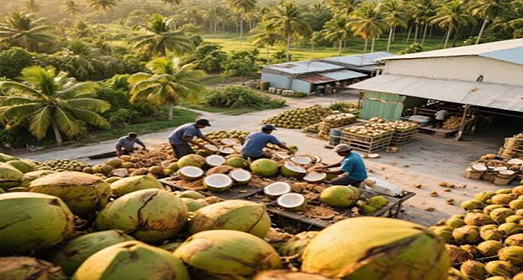
“Known traditionally as the ‘Kalpavriksha,’ the coconut palm serves as a vital pillar for rural economies, sustainable industrial transformation, and climate-resilient agriculture across tropical nations.”
World Coconut Day: Origins and Global Significance
Observed annually on September 2, World Coconut Day commemorates the founding of the Asian and Pacific Coconut Community (APCC). The day brings into focus the multi-faceted economic and social reliance on the coconut palm, encouraging cross-border cooperation, sustainable farming innovations, and market expansion among major producing countries.
The Essence of World Coconut Day and Its Origins
Observed annually on September 2nd, World Coconut Day highlights the profound socio-economic significance of the coconut palm, widely revered as Kalpavriksha (the tree that fulfills all desires). The date commemorates the establishment of the Asian and Pacific Coconut Community (APCC), underscoring the vital role the Asia-Pacific region plays in global production, processing, and trade. The annual observance honors the millions of smallholder farmers and rural communities whose tireless labor brings this versatile resource from farm gates to global markets.
India’s Cultivation Landscape and Smallholder Anchor
India stands among the world's leading coconut producers. Cultivation is heavily concentrated in southern coastal states, with steady contributions from eastern and western regions.
Primary Production Hubs: Kerala, Karnataka, Tamil Nadu, and Andhra Pradesh.
Expanding Regions: Odisha, West Bengal, Maharashtra, Goa, and parts of Northeast India.
Socio-Economic Impact: For small and marginal farmers, coconut serves as an ideal intercropping choice. Its long-term productivity provides a relatively stable, perennial income stream, shielding households from seasonal crop volatility.
The Multifaceted Utility Matrix
Every single part of the coconut palm holds practical and commercial value, creating an extensive economic chain spanning agriculture, handicrafts, and heavy industry.
| Plant Part / Derivative | Traditional Uses | Modern Industrial Applications |
|---|---|---|
| Water | Natural hydration drink | Packaged functional beverages, sports hydration markets |
| Kernel / Copra | Culinary consumption, home cooking | Virgin Coconut Oil (VCO), milk, powder, chips, cosmetics |
| Coir (Husk Fiber) | Rustic ropes, rough mats | Industrial brushes, geotextiles, rubberized coir padding |
| Shell | Rural fuel, basic cooking | Activated carbon, fuel briquettes, high-end handicrafts |
| Leaves & Trunk | Thatching, rural woodwork | Organic mulch, timber lumber, eco-friendly construction |
Market Expansion Through Value Addition and Coir
Shifting consumer preferences toward natural health products have unlocked new commercial frontiers. Tender and packaged coconut water have surged in popularity amidst urban wellness trends. Furthermore, value-added items like Virgin Coconut Oil (VCO), coconut milk, and desiccated powder allow producers to capture higher profit margins than selling raw nuts alone. Simultaneously, the coir industry transforms waste husks into sustainable, biodegradable materials—such as coir geotextiles for soil erosion control—meeting the rising global demand for eco-friendly industrial alternatives and boosting rural employment.
Environmental Stewardship and Climate Vulnerability
Beyond its economic footprint, the coconut palm is a crucial pillar of tropical and coastal ecosystems. Its deep roots stabilize shorelines, while its derivative products offer sustainable substitutes for petroleum-based plastics. However, climate change poses severe hurdles. Rising temperatures, irregular rainfall, prolonged droughts, cyclones, and pest infestations threaten orchard productivity. Mitigating these risks requires climate-resilient crop varieties, advanced water management, and proactive scientific pest control.
Strengthening Market Linkages and Global Competitiveness
To maximize the sector's potential, smallholder farmers require robust market integration. Expanding local cleaning, grading, packaging, and primary processing facilities ensures producers secure fair compensation rather than relying solely on raw commodity sales. Collaborative frameworks—including Farmer Producer Organizations (FPOs), cooperatives, and modernized supply chains—help bridge the gap between rural growers and urban buyers, shielding them from market volatility. By adhering to international quality standards, advanced packaging, and rigorous food safety norms, Indian coconut products can substantially expand their footprint in the global export market, reinforcing local village economies and driving sustainable rural prosperity.