'Viksit Bharat G RAM G' Initiative: Over ₹1.25 Lakh Crore Outlay Set to Transform Rural India
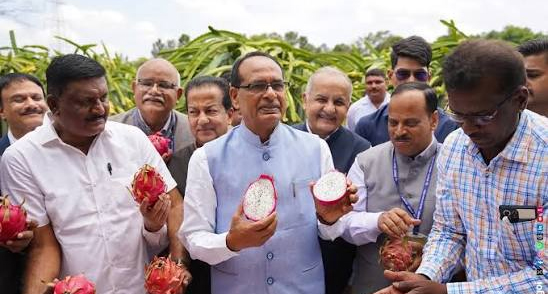
"Not a single worker should remain without work for even a day—seamless transition, guaranteed employment, and timely wage payments are non-negotiable under the new regime effective July 1, 2026."
In a major policy push to accelerate rural employment, worker security, and holistic village development, Union Minister for Rural Development, Agriculture, and Farmers' Welfare, Shivraj Singh Chouhan, chaired a high-level review meeting with State Rural Development Ministers. The meeting, conducted via video conferencing and attended by Union Minister of State Chandra Sekhar Pemmasani, focused on the execution of the flagship ‘Viksit Bharat G RAM G’ (Viksit Bharat Rural Employment & Livelihood Guarantee) framework.
Highlighting Prime Minister Narendra Modi’s vision for rural empowerment, Minister Chouhan emphasized that the transition to the new historic regime starting July 1, 2026, must be completely smooth, worker-centric, and uninterrupted.
Massive Financial Injection: ₹1.25+ Lakh Crore Pool
To ensure that development works and wage disbursements proceed without disruption, the Central Government has assembled a massive financial corpus:
Prior Allocation (MGNREGA): ₹30,000 Crore
New Interim Allocation Released: ₹95,692.31 Crore
Total Available Outlay: Over ₹1.25 Lakh Crore
This fund will reach approximately 2.80 lakh Gram Panchayats across India, ensuring that every local council receives lakhs of rupees directly to build durable community assets and generate local employment.
State and Union Territory-Wise Interim Allocations
The interim allocation of ₹95,692.31 crore released during the meeting breaks down as follows across key states, UTs, and administrative overheads:
Top State Allocations (Total: ₹92,550.17 Crore)
| State / Region | Interim Outlay (₹ in Cr) | State / Region | Interim Outlay (₹ in Cr) |
|---|---|---|---|
| Uttar Pradesh | ₹9,721.48 | Madhya Pradesh | ₹6,252.03 |
| West Bengal | ₹8,508.00 | Karnataka | ₹5,709.90 |
| Andhra Pradesh | ₹7,707.21 | Maharashtra | ₹4,420.32 |
| Tamil Nadu | ₹7,585.49 | Telangana | ₹3,825.31 |
| Rajasthan | ₹7,581.87 | Odisha | ₹3,763.80 |
| Bihar | ₹6,715.83 | Chhattisgarh | ₹3,354.85 |
(Additional major allocations include Kerala: ₹3,136.44 Cr; Jharkhand: ₹2,705.64 Cr; Assam: ₹1,929.70 Cr; Gujarat: ₹1,540.54 Cr; Punjab: ₹1,331.61 Cr; Himachal Pradesh: ₹1,203.28 Cr; and Tripura: ₹1,041.70 Cr).
Union Territories and Administrative Outlays (Total: ₹3,142.14 Crore)
Union Territories (UTs): ₹1,291.52 Crore (Jammu & Kashmir: ₹1,151.20 Cr; Ladakh: ₹85.98 Cr; Puducherry: ₹40.56 Cr; Dadra & Nagar Haveli and Daman & Diu: ₹9.02 Cr; Andaman & Nicobar: ₹4.44 Cr; Lakshadweep: ₹0.32 Cr)
Central Administration & Social Audit: ₹1,850.62 Crore
Digital Integration and Governance Directives
To guarantee operational readiness ahead of the July 1 rollout, Union Minister Chouhan issued critical operational directives to state leadership:
100% Digital Authentication: Rapid completion of e-KYC, Face Authentication, Direct Benefit Transfer (DBT) pipelines, and SMS-based alert systems.
State Notifications: Commending Mizoram, Puducherry, and Andhra Pradesh for issuing timely notifications, the Minister urged all remaining states to expedite state-level notifications.
State Budgetary Alignments: 26 states have already made state budget provisions for the goal of "Viksit Bharat-Gramin Bharat." Jharkhand, Karnataka, Telangana, and Mizoram were urged to finalize their budget provisions immediately.
Gram Sabha-Led Planning: Project selection will remain strictly rooted in Gram Sabha and Gram Panchayat proposals to reflect authentic local infrastructure needs.
Agricultural Peak Season Alignment: States must notify agricultural peak seasons and grant advance approvals for work projects to prevent seasonal labor shortages or wage gaps.
National Rural Development Conclave in Delhi
Minister Chouhan extended an invitation to all State Ministers and administrators to attend the National Rural Development Conclave scheduled for June 28–29, 2026, at the Pusa Institute in New Delhi. The conference will serve as a final coordination platform to align ground-level implementation strategies before the national launch.
Conclusion
The 'Viksit Bharat G RAM G' framework represents a decisive step toward building "Viksit Gram" (Developed Villages) as the foundation of a Developed India. With robust funding, digital transparency, and mandatory legal rights for rural laborers, this initiative is poised to deliver sustainable employment, durable infrastructure, and dignified livelihoods to millions across rural India.