Empowering India’s Youth: How PMKVY 4.0 is Shaping a Future-Ready Workforce for Atmanirbhar Bharat
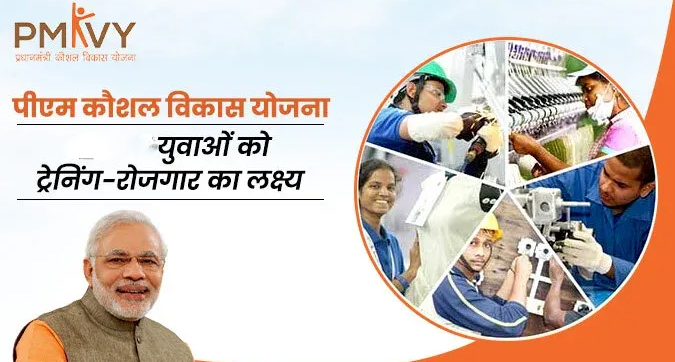
"Bridging traditional education and Industry 4.0 demands, Skill India's flagship scheme transforms demographic dividend into a global talent powerhouse."
India stands at a pivotal moment in its economic journey, boasting one of the largest youth populations in the world. This demographic advantage offers an unprecedented opportunity. However, rapid technological transformation, digital evolution, automation, and the onset of Industry 4.0 have dramatically reshaped labor market expectations. Traditional classroom education alone is no longer sufficient to bridge the gap between academic learning and industry demands.
To create a agile, highly productive workforce, India’s national skill ecosystem has pivoted toward competency-based training, lifelong learning, digital literacy, and emerging technologies. Under overarching national initiatives like the Skill India Mission and Atmanirbhar Bharat, the focus is firmly set on nurturing a workforce capable of capitalizing on both domestic and global employment opportunities.
Understanding Pradhan Mantri Kaushal Vikas Yojana (PMKVY)
The Pradhan Mantri Kaushal Vikas Yojana (PMKVY) is the flagship, outcome-based skill training initiative driven by the Ministry of Skill Development and Entrepreneurship (MSDE) and executed through the National Skill Development Corporation (NSDC). As India’s largest skill certification scheme, PMKVY aims to enable a vast workforce to secure industry-relevant skill training, boost employability, and build sustainable livelihoods.
Launched on World Youth Skills Day (July 15, 2015) by Prime Minister Narendra Modi, the scheme was established with an initial vision to skill 10 million youth. By combining state-of-the-art training centers, master artisans, and structured curricula, PMKVY marks a cornerstone step in positioning India as the "Skill Capital of the World."
The Strategic Evolution of PMKVY
PMKVY 1.0 (2015–2016): Served as the pilot phase, successfully establishing the outcome-based skill training and national certification framework.
PMKVY 2.0 (2016–2020): Scaled up with an approved budget of ₹12,000 crore, introducing dual implementation models—Centrally Sponsored Centrally Managed (CSCM) and Centrally Sponsored State Managed (CSSM)—alongside stringent quality metrics.
PMKVY 3.0 (2020–2022): Shifted focus toward decentralized planning by introducing District Skill Development Plans (DSDPs) and forging deeper ties with State Skill Development Missions.
PMKVY 4.0 (2023–Present): The ongoing modern phase, heavily prioritizing industry integration, technology-driven learning, future-ready skill sets, and outcome-focused execution.
PMKVY 4.0: Shaping the Modern Work Landscape
Unveiled in 2023, PMKVY 4.0 reflects the evolving needs of modern industry while embedding lifelong learning into its core framework. Aligned with the National Education Policy (NEP) 2020 and the National Credit Framework (NCrF), this iteration integrates blended learning, hands-on workplace exposure, and strong industry partnerships.
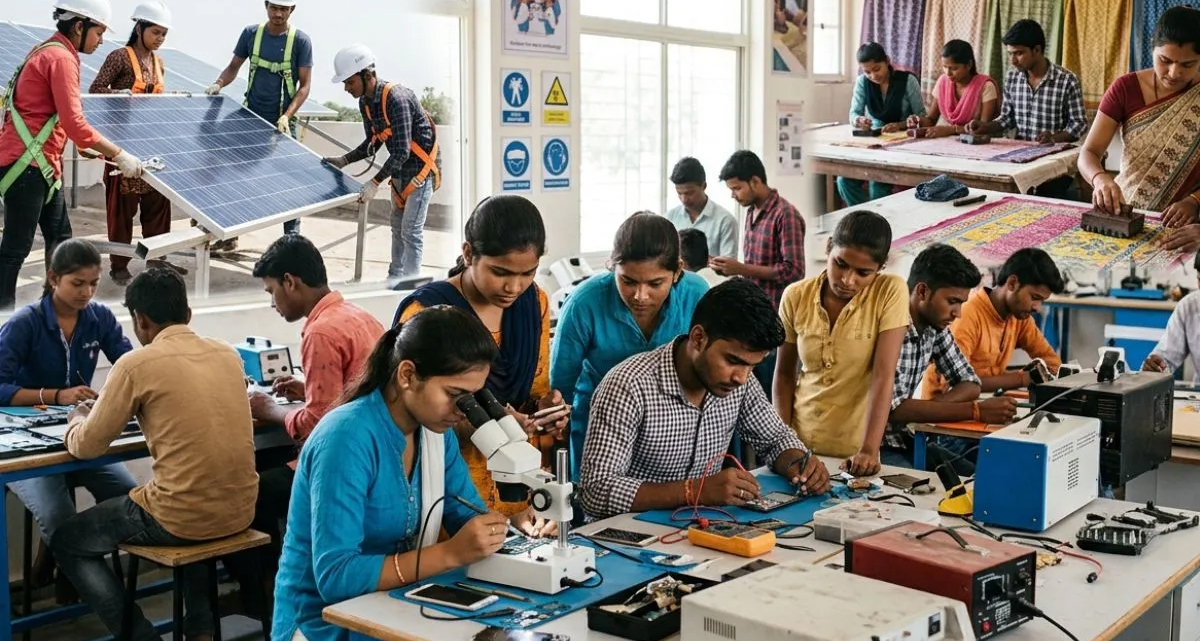
While continuing to support traditional vocational trades, PMKVY 4.0 heavily emphasizes cutting-edge fields, including:
Artificial Intelligence (AI) & Data Analytics
Robotics, Internet of Things (IoT), and Coding
Drone Technology, 3D Printing, and Cyber Security
Electric Vehicles (EV) and Semiconductor Manufacturing
Green Jobs and Renewable Energy Technologies
Core Strategic Objectives
Industry-Aligned Standards: Delivering competency-based, market-driven training mapped to National Occupational Standards (NOS).
Enhanced Employability: Driving placement-oriented skill training and supporting self-employment and entrepreneurship.
Digital & Flexible Delivery: Expanding accessibility through the Skill India Digital Hub, offering hybrid and blended learning options.
Recognition of Prior Learning (RPL): Formally certifying self-taught and informal workers.
Inclusivity & Equity: Prioritizing access for women, marginalized communities, and underserved regions.
Data-Driven Accountability: Leveraging biometric tracking, digital certification, and post-certification candidate tracking to ensure transparent outcomes.
Flexible Training Pathways
PMKVY 4.0 provides three distinct, tailored training pathways to cater to candidates at different stages of their careers:
| Training Pathway | Target Audience | Key Features & Structure |
|---|---|---|
| Short-Term Training (STT) | Unemployed youth, school/college dropouts | • Duration: 300 to 600 hours aligned with NSQF.
• Includes mandatory On-the-Job Training (OJT) prescribed by NCVET.
• Prepares candidates for salaried jobs or self-employment. |
| Recognition of Prior Learning (RPL) | Informal workers, experienced tradespeople | • Assesses and certifies existing skills gained via informal work.
• Offers bridge courses for candidates seeking higher certification levels. |
| Special Projects | Vulnerable groups, hard geographies, niche trades | • Custom, project-based interventions for specialized or emerging job roles.
• Offers flexible operational guidelines and residential/non-residential formats upon committee approval. |
Key Benefits for Candidates
PMKVY 4.0 is engineered to eliminate financial, geographic, and logistical barriers to skill acquisition—particularly for women, Persons with Disabilities (PwD), and candidates from remote regions.
100% Free Skill Training: The total cost of training is fully funded by the scheme.
Assessment & Recognized Certification: Candidates receive national-level digital certification upon evaluation by authorized Sector Skill Councils (SSCs).
Starter Kits & Uniforms: Enrolled candidates receive complimentary induction kits and domain-specific uniforms.
Boarding & Lodging Support: Residential facilities are provided to candidates from aspirational, border, tribal-dominated, and affected districts, as well as women and PwD candidates.
Stipend & Travel Support: Non-residential female and PwD candidates receive transportation allowances to ease daily commutes.
Dedicated PwD Assistance: A financial allowance of ₹5,000 is allocated to candidates with disabilities for assistive devices and specialized learning materials.
Social Security & Insurance: Candidates receive free 1-year accidental insurance coverage for the duration of their training.
Transparent Governance & Career Tracking: Operations rely on Aadhaar-Enabled Biometric Attendance Systems (AEBAS) for attendance integrity, paired with post-certification tracking to monitor employment outcomes.
Conclusion
PMKVY 4.0 represents more than just a training program—it is a strategic framework designed to convert India's immense youth potential into an engine for economic growth. By bridging the gap between traditional education and industry demand, PMKVY 4.0 is laying a solid foundation for sustainable livelihoods, inclusive development, and a globally competitive workforce.