Climate Heatwave and Gendered Vulnerability: How Rising Temperatures Fuel Intimate Partner Violence
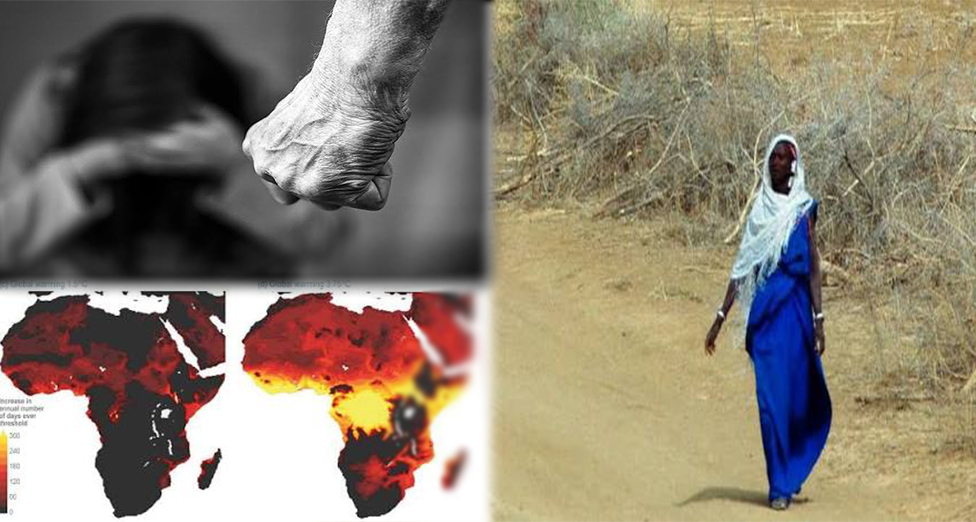
A global study led by Austria's IIASA highlights the profound connection between ambient heat, socio-economic fragility, and domestic violence—underscoring education and social empowerment as vital shields for vulnerable women.
Climate change has transcended environmental boundaries. Beyond melting glaciers, shifting weather paradigms, agricultural disruption, and severe water scarcity, extreme heat is manifesting as a profound social crisis—directly threatening the safety, health, and dignity of marginalized populations, particularly women.
A comprehensive multi-country investigation conducted by researchers at the International Institute for Applied Systems Analysis (IIASA) in Austria, alongside colleagues from New Zealand and South Africa, reveals that unusually high ambient temperatures significantly heighten the risk of Intimate Partner Violence (IPV) against women. Published in the peer-reviewed journal Global Environmental Change, the findings establish a critical link between climate stress and systemic gender-based vulnerabilities.
Scope and Core Findings of the Study
The research team performed a rigorous empirical analysis of data spanning two decades (2003–2024), utilizing 61 Demographic and Health Surveys (DHS) across 31 Sub-Saharan African nations. The dataset surveyed women aged 15 to 49, offering a detailed cross-sectional look at socio-environmental stress.
Key Statistical Parameters
| Metric / Dimension | Overview |
|---|---|
| Geographic Scope | 31 Sub-Saharan African countries |
| Analytical Window | 2003–2024 (comprising 61 Demographic & Health Surveys) |
| Sample Group | Women aged 15–49 years |
| Impacted Domains | Substantial increase in emotional and physical violence |
| Observed Neutrality | No statistically significant direct correlation with sexual violence |
Heat as a Risk Multiplier: Psychological and Interpersonal Strain
Lead researcher Jonas Peisker (IIASA) emphasizes that extreme temperatures do not directly generate violence in a vacuum. Instead, extreme heat functions as a potent risk multiplier, amplifying pre-existing relational tensions, financial instability, and emotional strain.
Irritability and Psychological Stress: Thermal distress induces physical discomfort, sleep deprivation, elevated cortisol, and severe anxiety—exacerbated by weather-induced agricultural and financial uncertainty.
Domestic Conflict Acceleration: In households where interpersonal friction already exists, unbearable heat lowers conflict thresholds, escalating verbal disagreements into domestic abuse.
Identifying the Most Vulnerable Demographics
The study demonstrates that extreme heat does not affect all populations equally. Resource deficits, lack of safety nets, and institutional barriers compound the risk for specific groups.
Rural and Low-Education Settings: Women residing in rural environments with primary education or less face disproportionately higher abuse risks during thermal spikes. A lack of financial capital and alternative housing constrains their ability to escape abusive environments.
Substance Abuse Strain: Male partner alcohol abuse remains one of the strongest predictive risk factors for physical IPV during periods of climatic stress.
Economic Backlash: Counterintuitively, employed women reported higher rates of partner violence during extreme heat events. Researchers hypothesize that male partners may react to female financial independence with hostility or attempts to assert power, particularly under environmental and economic distress.
Projections to 2050: Demographic Shifts and Strategic Scenarios
Co-author Roman Hoffmann highlights that the landscape of intimate partner violence through 2050 will depend not only on global temperature trajectories, but on socio-economic development policies chosen today.
Socio-Economic Trajectories and IPV Projections
The Demographic Reality: Even if the percentage (prevalence rate) of affected women decreases under favorable development models, rapid population growth across Sub-Saharan Africa means the absolute number of women suffering from IPV could still rise significantly, demanding expanded support infrastructure.
Integrating Gender Safety into Climate Adaptation Policies
The study makes a clear case for policymaking: climate adaptation frameworks must incorporate gender-based violence (GBV) prevention strategies alongside infrastructure and environmental goals.
Actionable Policy Recommendations
Prioritize Female Education: Keep girls in school longer and enforce legal safeguards against child marriage.
Foster Economic Inclusion: Expand female economic opportunities, land rights, and financial inclusion to provide genuine autonomy.
Engage Men and Boys: Launch targeted community campaigns focused on gender equality, healthy emotional regulation, and non-violent conflict resolution.
Dismantle Harmful Norms: Restructure local community response models to eliminate toxic masculinities and offer accessible legal, medical, and psychological aid.
Conclusion
The study does not suggest that every warming degree automatically triggers domestic abuse. Rather, it serves as an urgent warning: climate change acts as an environmental catalyst that unearths and deepens underlying social, economic, and institutional vulnerabilities.
Mitigating the climate crisis is not solely a technical effort to curtail carbon emissions or stabilize temperatures—it is a moral imperative to protect the rights, safety, and dignity of the world's most vulnerable populations.
This report synthesizes findings from research published in Global Environmental Change by scientists at the International Institute for Applied Systems Analysis (IIASA, Austria), alongside collaborating institutions in New Zealand and South Africa.