
Beyond the Shadow of Forgotten Memories: Why Early Diagnosis and Family Support Are the True Antidotes to Alzheimer’s
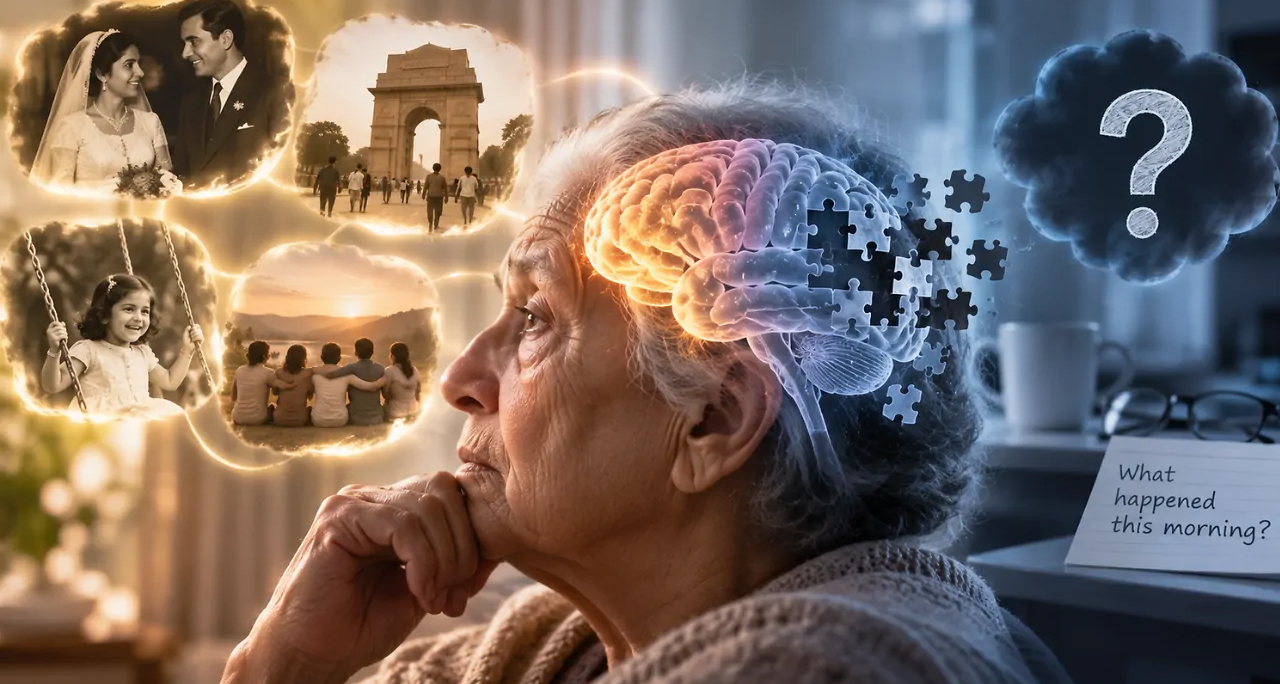
A person is defined not merely by their physical form, but by the tapestry of their experiences, relationships, and quiet moments of joy. When cognitive decline strikes, compassion, structured clinical care, and a supportive ecosystem can restore the grace every elder deserves.
A human being’s identity is far richer than a name, a familiar face, or a physical silhouette. Our true essence is woven from our memories, shared experiences, relationships, language, daily habits, and the quiet moments that anchor our past to our present. Consequently, when an individual’s memory and cognitive faculties begin to fade, the impact extends far beyond clinical health—it reverberates through their self-esteem, behavior, social life, and the emotional fabric of their entire family.
Alzheimer’s disease represents a profound manifestation of this challenge. It is not merely benign forgetfulness, but a progressive neurodegenerative condition that systematically impairs memory, reasoning, judgment, and the capacity to perform essential daily activities. While minor memory slips can accompany normal aging, persistent warning signs should never be dismissed. Repeating the same questions, failing to recognize familiar faces or places, struggling with routine tasks, searching endlessly for common words, or exhibiting sudden behavioral shifts require timely medical evaluation to establish clarity and chart a compassionate path forward.
Unraveling the Distinctions: Dementia vs. Alzheimer’s Disease
To understand Alzheimer’s, one must first understand dementia. Dementia is not a single, isolated illness; rather, it serves as an umbrella term for a range of conditions characterized by a decline in cognitive function severe enough to interfere with daily living. It impairs memory, abstract thinking, language comprehension, executive function, and decision-making skills.
Alzheimer’s disease is the most frequent cause of dementia, accounting for 60 to 70 percent of cases. However, not all dementia is Alzheimer’s. Other major forms include:
Vascular Dementia: Caused by conditions that damage brain blood vessels and reduce blood flow.
Lewy Body Dementia: Driven by abnormal protein deposits (alpha-synuclein) inside nerve cells.
Frontotemporal Dementia: Characterized by progressive nerve cell loss in the brain's frontal or temporal lobes, often altering personality and language first.
In some individuals, mixed pathologies coexist. Therefore, assuming every instance of forgetfulness is Alzheimer’s is scientifically inaccurate; precise clinical evaluation is crucial to identify the root cause.
Dismantling the Myth: Cognitive Decline Is Not "Just Old Age"
One of the most widespread misconceptions surrounding Alzheimer’s and related dementias is the belief that severe cognitive impairment is an inevitable consequence of growing old.
While advanced age remains the strongest known risk factor, dementia is not a normal part of biological aging. According to the World Health Organization (WHO), while the prevalence of dementia rises significantly after age 65, young-onset dementia can and does occur in younger populations. Instead of attributing cognitive changes strictly to chronological age, families and clinicians must pay close attention to progressive shifts in behavior and functional ability that interfere with independent living.
Recognizing the Early Warning Signs
The onset of Alzheimer’s is often subtle, frequently mimicking casual absentmindedness. In its initial stages, an individual may experience:
Short-term memory loss: Forgetting recently learned information or key events.
Repetitive questioning: Asking the same question repeatedly or misplacing items in unusual spots.
Linguistic challenges: Pausing mid-sentence, struggling to find common words, or losing the train of thought.
Spatial and temporal disorientation: Losing track of dates, seasons, or getting confused along familiar routes.
Mood and behavioral alterations: Withdrawing from social engagements, experiencing heightened anxiety, or exhibiting unexpected apathy and depression.
Identifying these subtle indicators early empowers families to seek professional guidance before functional independence is significantly compromised.
The Biological Landscape: What Happens Inside the Brain?
At a cellular level, Alzheimer’s is a complex neurodegenerative process marked by the progressive breakdown of neurons and their synaptic connections. Microscopic hallmark changes inside brain tissue involve two primary protein abnormalities:
Amyloid Plaques: Abnormal clusters of beta-amyloid protein fragments that accumulate in the spaces between nerve cells.
Neurofibrillary Tangles: Twisted fibers composed of tau protein that build up inside dying brain cells, disrupting the intracellular transport system.
As the disease advances, communication between neurons collapses, leading to widespread cellular atrophy. However, pathology alone does not tell the whole story. Genetics, vascular health, metabolic factors, environmental triggers, and daily habits all influence an individual's overall risk profile.
Modifiable Risk Factors and the Power of Prevention
According to global research synthesized by the WHO, up to 45% of dementia cases could be delayed or prevented by addressing modifiable risk factors across the lifespan.
| Risk Factor | Impact on the Brain | Targeted Intervention Strategy |
|---|---|---|
| Cardiovascular Strain | High blood pressure, diabetes, and obesity compromise cerebral blood flow and accelerate neural damage. | Maintain a balanced diet, monitor glucose levels, and adhere to prescribed cardiovascular medications. |
| Physical Inactivity & Isolation | Sedentary habits reduce neuroplasticity; social isolation accelerates cognitive decline. | Engage in regular aerobic exercise (e.g., daily walking) and maintain active community connections. |
| Substance Exposure | Chronic smoking and excessive alcohol intake cause systemic inflammation and neurotoxicity. | Complete cessation of smoking and strict moderation or elimination of alcohol consumption. |
| Sensory Loss | Uncorrected hearing or vision loss reduces cognitive input, straining processing bandwidth. | Undergo routine sensory screenings and utilize hearing aids or corrective lenses promptly. |
| Chronic Stress & Poor Sleep | Sleep deprivation impairs the brain's glymphatic clearing system, increasing metabolic waste build-up. | Practice stress-reduction techniques, read regularly, learn new skills, and prioritize 7–8 hours of restful sleep. |
Diagnostic Innovations: "The Earlier You Know, The More You Can Do"
The overarching theme for global awareness initiatives centers on eliminating diagnostic delay: "The Earlier You Know, The More You Can Do." Timely detection grants individuals and their families the crucial window required to manage health, arrange legal and financial affairs, and structure long-term care plans thoughtfully.
Diagnosing Alzheimer’s extends beyond a simple routine checkup or single blood test. Neurologists employ a comprehensive, multi-layered approach:
Clinical History & Behavioral Mapping: Detailed interviews with the patient and family members to chart cognitive and daily changes.
Neuropsychological Testing: Standardized cognitive assessments evaluating memory, attention, language, and problem-solving.
Neuroimaging Studies: High-resolution MRI or CT scans to rule out structural anomalies (like strokes or tumors) and measure brain atrophy.
Advanced Biomarkers: Emerging clinical diagnostics, including CSF analysis and blood-based biomarker tests, are rapidly refining early detection capabilities globally.
Therapeutics and the Pipeline of Hope
While a universal cure for dementia remains elusive, therapeutic approaches have advanced significantly, focusing on symptom management, functional retention, and disease modification.
According to Alzheimer’s Disease International (ADI), the global clinical pipeline features 158 promising drug candidates across nearly 200 clinical trials, signaling a transformative era in neurodegenerative medicine.
Current care strategies combine pharmacological treatments designed to regulate neurotransmitters with non-pharmacological interventions like cognitive stimulation therapy, occupational adaptations, and physical rehabilitation.
The Caregiver's Imperative: Compassion over Confrontation
Alzheimer’s never affects a person in isolation; it profoundly touches the lives of family members and caregivers. Navigating daily interactions requires replacing confrontation with empathy and structured patience. Arguing over forgotten facts or scolding an elder for disorientation only heightens distress.
The Unseen Burden on Women and Families
Global epidemiological data highlights a stark reality: the worldwide economic cost of dementia exceeds $1.3 trillion, with informal caregiving forming a substantial portion of this load. Notably, women account for approximately 70% of total caregiving hours globally. Providing adequate social, psychological, and financial support networks for family caregivers is therefore an urgent public health necessity, not an optional luxury.
Navigating Unique Structural Challenges in India
In a culturally diverse country like India, evolving demographics present specific challenges for dementia care:
Societal Transitions: The gradual shift from traditional joint family systems to nuclear setups, combined with urban migration, often leaves elders without multi-generational care support at home.
Healthcare Disparities: Rural areas frequently lack specialized geriatric and neurological care, while high diagnostic costs in urban centers create entry barriers for middle- and low-income families.
In response, initiatives such as the National Programme for Health Care of the Elderly (NPHCE) by the Government of India are working to reinforce primary, secondary, and tertiary healthcare infrastructure—establishing dedicated geriatric wards, training community workers, and deploying specialized facilities at district hospital levels.
Eradicating Stigma, Leveraging Technology, and Preserving Dignity
To build a compassionate ecosystem for those living with cognitive decline, society must align around three core principles:
Eliminating Social Stigma: Ridiculing or marginalizing individuals for memory slips or behavioral changes inflicts deep emotional harm. A person must always be recognized for their inherent humanity and dignity, never defined solely by their diagnosis.
Integrating Assistive Technology: Telemedicine platforms, digital cognitive assessment tools, and artificial intelligence (AI) models are accelerating early risk identification. Crucially, AI and digital devices should serve as supportive tools that empower clinicians and caregivers, rather than replacements for human empathy and medical expertise.
Fostering Autonomy through Reminiscence: Creating a secure home environment while encouraging safe, independent activities—such as gardening, listening to familiar music, or browsing old photo albums—stimulates positive emotional pathways and preserves a sense of purpose.
The Path Forward
The ultimate challenge presented by Alzheimer’s disease goes beyond safeguarding memory alone—it is about preserving an individual's autonomy, honor, and quality of life. Through timely medical diagnosis, proactive health habits, accessible infrastructure, and the enduring warmth of family support, we can ensure that our elders walk through their later years surrounded by grace, understanding, and unconditional dignity.
This article is based on an in-depth clinical consultation with Dr. Ashish Kumar Duggal, Senior Professor in the Department of Neurology at the Atal Bihari Vajpayee Institute of Medical Sciences (ABVIMS) and Dr. Ram Manohar Lohia Hospital, New Delhi, reflecting his extensive clinical research and medical experience.