Uncounting the Unseen: Why Rural India's Plastic Footprint is Key to a Truly Circular Economy
Bridging the Data Void: From Hidden Rural Waste Streams to an Inclusive National Recycling Framework
Beyond the bustling hubs of India's metro cities lies a sprawling, unaccounted environmental challenge: millions of tons of unmeasured rural plastic waste. While urban centers benefit from structured tracking under the Swachh Bharat Mission (Urban), two-thirds of India's population living in rural areas remains largely invisible in national waste accounting.
A recent ground-level evaluation by the Vivek PARC Foundation, a development-oriented think tank, highlighted this reality during a three-day field visit to a Nagar Panchayat in Maharashtra. Behind a community facility lay months of unsegregated food wrappers, pouches, and milk packets—estimated rather than weighed, illustrating a systemic gap in waste reporting across India’s rural and peri-urban landscapes.
The Invisible Scale: What the Numbers Miss
Official data from the Central Pollution Control Board (CPCB) for 2022–23 estimates India's annual plastic waste generation at 4.1 million tons, supported by an Extended Producer Responsibility (EPR) network of over 43,000 producers and 2,600 recyclers. However, these figures exclusively reflect urban formal systems.
Key Discrepancies & Estimates:
Rising Rural Consumption: Rural per capita monthly expenditure reached ~₹4,100 in 2024, driving a surge in packaged fast-moving consumer goods (FMCG).
Uncounted Generation: Even a conservative per capita estimate of 0.5–0.8 kg/year of rural plastic waste adds 0.44–0.76 million tons of unaccounted plastic annually.
True Domestic Footprint: Factoring in rural consumption pushes India's actual household plastic waste creation to an estimated 6.5 to 10.8 million tons per year.
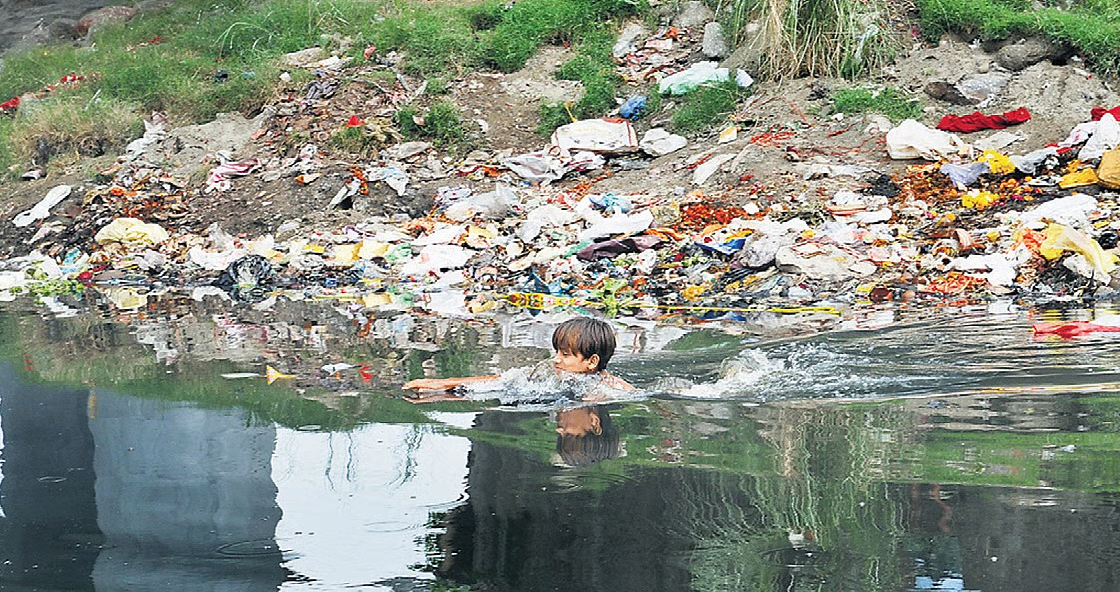
Microplastic Emissions: Recent independent studies estimate India's yearly microplastic emissions at 9.3 million tons, fueled by open burning, dumping, and uncollected waste scattered across village clusters, agricultural fields, and local markets.
Systemic Consequences of Missing Data
The lack of official rural waste metrics triggers a domino effect across funding, market dynamics, and infrastructure planning:
| Impact Area | Consequences of Missing Data |
|---|---|
| Funding & Grants | Rural local bodies struggle to present evidence-based proposals for waste infrastructure grants without verified baseline data. |
| Recycling Markets | Formal recyclers lack visibility and logistical incentives to extend collection networks into rural hinterlands. |
| EPR Credit Allocation | Producer obligations remain anchored to urban consumption, failing to credit or fund collection efforts in villages. |
| Infrastructure Planning | Waste processing facilities are under-designed, scaling for urban centers while leaving rural waste unmanaged. |
Structural Bottlenecks at the Grassroots
Despite the Solid Waste Management Rules (2016) empowering Gram Panchayats and Nagar Panchayats as local administrative authorities, systemic hurdles persist:
Limited Technical Capacity: Most local bodies rely on broad conjecture rather than actual weighing and categorizing.
Lack of Formal Training: Sanitation workers and local officers receive minimal instruction on segregation, waste characterization, and reporting protocols.
Information-Only Awareness: Public campaigns rely on message delivery rather than behavioral mechanics (incentives, feedback loops, and social norms).
Scattered Geography: Low population density makes collection logistically expensive and dispersed.
Standard Operating Procedure (SOP) Deficits: While CPCB offers a detailed SOP for plastic waste characterization, rural authorities lack the technical support to execute reports without them being returned for revisions.
Roadmap to an Inclusive Circular Economy
Integrating rural plastic waste into national frameworks requires a pragmatic, phased approach leveraging existing rural infrastructure:
Tiered Data Collection: Utilize frontline workers (Sanitation staff, Self-Help Groups) to conduct quarterly sample-based surveys tracking basic plastic typologies and disposal methods.
Digital Integration via e-GramSwaraj: Compile local waste data into simple registers and upload them onto existing portals like e-GramSwaraj, avoiding the need to build parallel systems.
District & State Aggregation: Shift the focus of block and district offices toward data verification rather than collection, mirroring the multi-tier verification model of Swachh Bharat Mission (Gramin).
EPR Framework Realignment: Extend producer incentives to support rural aggregation, giving formal recognition and fair value to informal waste collectors and small aggregators operating in rural hubs.
Aligning Policy with National Vision
India’s advocacy during its G20 Presidency emphasized inclusive circularity and citizen-led behavioral change. Incorporating rural data into the Swachh Bharat Mission (Gramin) dashboard bridges the gap between policy intent and ground reality.
Accounting for the unseen is not an admission of failure, but a prerequisite for sustainable development. Recognizing, measuring, and integrating rural waste flows into mainstream policy ensures that India's journey toward a circular economy encompasses every community on the path to Viksit Bharat.